Quality & design
When to redesign your website: 6 signals you should not ignore
Redesign your website when it stops doing its job: it loads slowly, looks dated, breaks on a phone, brings in few leads, is hard to update, or no longer reflects what your business has become. You do not need a date on the calendar, you need to read the signals. When two or three show up together, a redesign stops being optional.
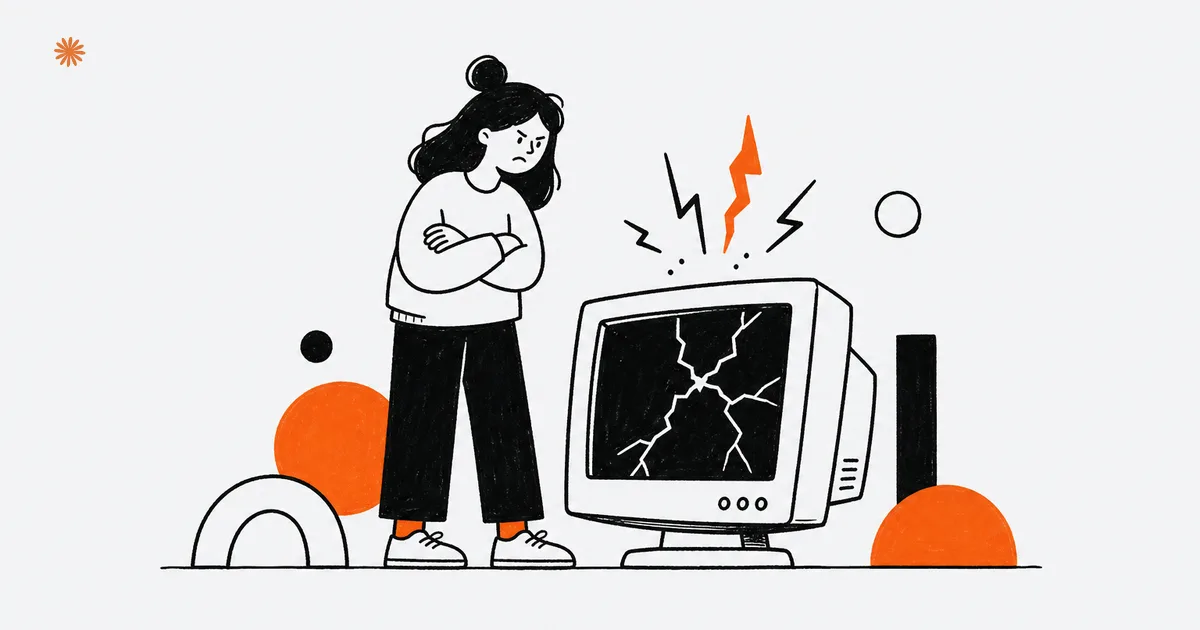
When is it really time to redesign your website?
Redesign your website when it stops doing its job: it brings in few leads, loads slowly, looks stuck a few years back, is clumsy on a phone, takes effort to update, or no longer tells the story of who you have become. There is no date on the calendar that tells you to start. What tells you is the signals. When two or three of them show up at once, a redesign stops being a luxury and becomes the move that wins back customers you are losing right now without realizing it.
A redesign starts from what you already have: it keeps the content and rankings that work and fixes what holds you back (look, speed, structure, conversion). That makes it different from rebuilding from scratch, and usually faster and cheaper. Below are the six signals to check one by one. Read them like a checklist and mark the ones that apply to you.
Open your own site while you read and use the six signals as a checklist. If you check off at least two, it is time to plan the redesign, starting with whatever is costing you the most leads.
Signal 1: The site is slow
The first signal is slowness. If your site takes seconds to appear, you lose visitors before they read a single line, and Google pushes you further down the results. It is a double penalty: you get found less and you convert worse, because someone searching with urgency will not wait for a page that loads in pieces.
Speed is measured by the Core Web Vitals, the metrics Google uses to judge how quickly a page becomes usable and stable. The most common causes are oversized images, cheap hosting, and too many plugins running for nothing. A redesign is often the chance to rebuild the site on modern technical foundations instead of patching a structure that was born outdated. The detail on what to measure and how to fix it is in the guide to Core Web Vitals and a fast website.
Signal 2: It looks dated
The second signal is a look frozen in time. A site that feels like it is ten years old sends an unintended message: a business that is not paying much attention, maybe not even very active. Visitors project onto your service the impression the page gives them, and a neglected design makes people doubt skills that may be flawless.
The judgment is instant and silent. No one writes to tell you "your site looks old", they simply close the tab and try somewhere else. The usual tells are tiny type, stock photos, a rigid layout, too many colors, crowded spacing. A clean, readable design signals method and care, the same qualities the client is looking for in you. A redesign is the moment to bring the look in line with the standard of your work.
Signal 3: It does not work on a phone
The third signal is a site that is awkward on a smartphone. Most searches today happen on a phone, and Google indexes the mobile version of the page first. If your site was built for the desktop and turns tiny or hard to use on a phone, you are pushing away the exact people searching for you while they are out and about, right when they would be ready to reach out.
Mobile-first does not mean "it also shows up on a phone", it means designed for the phone first. In practice that means a tap-to-call number, a form you can fill out with your thumb, and text you can read without zooming. Try it right now: open the site on your own phone and try to call yourself and send a request. If you have to pinch to zoom or fight with it, there is work to do.
Signal 4: It does not bring in leads
The fourth signal is the most concrete: the site does not generate leads. If you get inquiries from word of mouth and referrals but almost nothing from the site, the site is not working for you. A site that brings in no calls, emails, or appointments is a dark storefront: present, but silent. This is the signal that weighs the most, because it goes straight to the reason the site exists at all.
Often it is not traffic that is missing, it is conversion: visitors arrive but find no clear reason to act and no simple path to do it. The usual causes are weak calls to action, long forms, hidden contact details, and no proof of trust. A conversion-focused redesign goes right at this. How to turn visits into requests is explained in the guide to a website that converts.
Signal 5: It is hard to update
The fifth signal is the struggle to update it. If changing your hours, adding a service, or posting an announcement means calling someone and waiting days, the site is holding you hostage. A site you cannot update yourself ages fast, because it ends up frozen: outdated information just sits there, and whoever reads it takes it for the truth.
A modern site runs on a CMS, the dashboard where you manage text, images, and pages without touching code. If yours was custom-built with no dashboard, or sits on a platform that has since been abandoned, every change is a cost and a wait. A redesign is the right moment to give you autonomy: updating the site should cost you minutes, not a whole process.
Signal 6: It no longer represents you
The sixth signal is a mismatch: the site describes a business you no longer are. You have grown, added services, shifted to different clients, raised the level of your work, and the site stayed behind. When what you show online is smaller than what you deliver in person, the site works against you: people who discover you there form a smaller idea of you than you deserve.
It is the least technical signal and often the most important, because it touches your positioning. A repositioning (new audience, new services, new tone) calls for a site that matches where you have arrived, not where you started. Here a redesign is not just aesthetics: it is stating clearly who you are today, who you are speaking to, and why they should choose you. A site that is aligned does the screening for you, attracting the right clients and discouraging the wrong ones.
What to do now: redesign or a brand-new site?
Start by counting the signals. If one or two apply and the underlying structure holds up, a targeted redesign is almost always the right call: it keeps the content and rankings that work, fixes the look, speed, and conversion, and gives you the fastest result. If instead the site is dated on nearly every front, built on outdated technology and impossible to update, rebuilding from scratch is less work than patching it forever.
The practical rule is simple: keep what works, rebuild what holds you back. A good starting point is to order the fixes by impact: first the signals that lose leads immediately (speed, mobile, conversion), then the ones that work on trust and positioning (look, autonomy, consistency). The difference between refreshing what you have and starting over, with the criteria to decide, is in the guide to a business website redesign.
- You checked 1 to 2 signals and the base holds: a targeted redesign, faster and cheaper, starting with the signal that is costing you the most leads.
- You checked almost every signal: consider a new site on modern foundations, especially if the platform is abandoned or impossible to update.
- You changed your business or audience: start from positioning, then build the site around who you are today.
Want to know whether your site just needs a targeted redesign or is better rebuilt? And how much speed is weighing on the leads you are losing? We look at yours together, no obligation.
Let's talkFrequently asked questions
- How often should you redesign a website?
- There is no fixed expiration date: you redesign when it stops working, not when it hits a certain age. In practice many sites show the signals after a few years, once design, technology, and content fall behind. Count the signals on this list: if two or three apply, it is time, regardless of age.
- Is a redesign or a new site the better choice?
- It depends on how many signals apply. If the base holds and the problems are few, a redesign is faster and cheaper and protects the rankings you already have. If the site is dated on nearly everything, built on an abandoned platform and impossible to update, rebuilding from scratch makes more sense.
- How much does it cost to redesign a website?
- It depends on the scope: a targeted redesign costs less than a site rebuilt from scratch, because it reuses what works. The price moves with the number of pages, the features, and how much has to be fixed. To gauge your budget, start from the signals you want to correct, so you know what is actually needed.
- Will I lose my SEO if I redesign the site?
- Not if the work is done right. A well-managed redesign preserves content, page addresses, and rankings, and sets up redirects where needed so you do not lose the value you earned. Problems arise when everything is rebuilt with no map: pages disappear, addresses change without redirects. Planned with method, a redesign protects your SEO and often improves it.

DigitiNexus — Web & Design Agency
We are a team of designers and developers specialized in SEO, Next.js and digital growth for professional firms, small businesses and startups, in the US and beyond. We build websites that bring real traffic and real clients.